Mastering 3D Sublimation with the Cardinal Cracked Hole Design
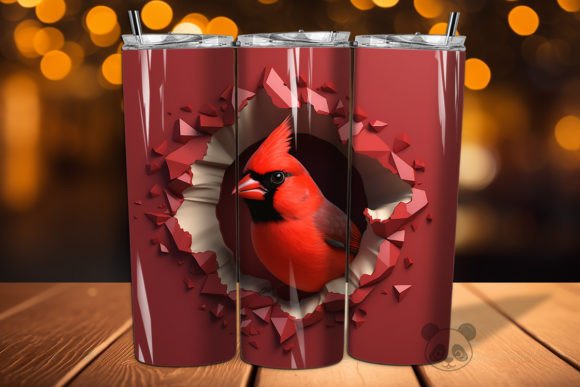
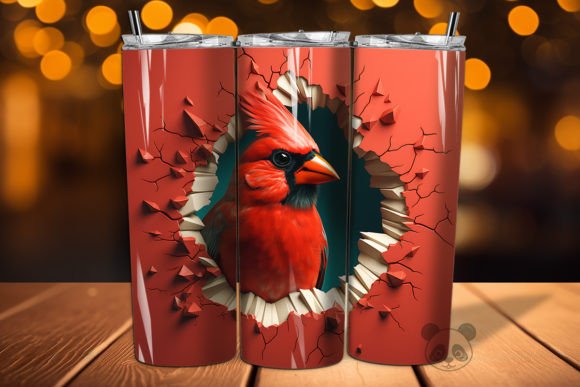
In the rapidly evolving world of custom drinkware, sublimation printing has become a cornerstone for creators looking to produce high-quality, durable designs. Among the myriad of options available to professionals and hobbyists alike, the Cardinal 3D Cracked Hole Tumbler Wrap 3 stands out as a sophisticated choice for those aiming to add depth and texture to their products. This digital asset is not merely a static image; it is a carefully engineered design intended to transform a standard 20 oz skinny tumbler into a piece of art that appears to have three-dimensional qualities.
Understanding the nuances of 3D sublimation wraps is essential for anyone serious about their craft. Unlike traditional flat prints, these designs utilize shading, perspective, and intricate patterns to create an optical illusion of depth. The Cardinal 3D Cracked Hole Tumbler Wrap 3 specifically leverages a "cracked hole" aesthetic combined with watercolor bird motifs to achieve a unique visual effect. When applied correctly, the result is a tumbler that looks as though the surface has been artistically fractured to reveal a vibrant, nature-inspired scene beneath.
The Anatomy of a High-Quality Digital Wrap
At the heart of this product is the file itself. Users receive an instant digital download containing a single ZIP file, which houses a high-resolution PNG measuring 9.3 inches by 8.2 inches at 300 DPI. These specifications are critical. In the realm of sublimation, resolution is king. A 300 DPI (dots per inch) count ensures that when the image is transferred onto the tumbler, the edges remain crisp, and the colors do not appear pixelated or blurry. The dimensions are pre-calculated to fit the curvature of a straight 20 oz skinny tumbler, accounting for the necessary overlap and the distortion that occurs when wrapping a flat image around a cylinder.
The design features a seamless pattern involving birds rendered in a watercolor style. This artistic choice is significant because watercolor textures blend exceptionally well with sublimation ink, allowing for smooth gradients and soft transitions that mimic traditional painting. The "3D Bird" element mentioned in the design title refers to the layering technique used within the graphic. By manipulating light and shadow around the bird figures and the cracked background, the design creates a sense of volume. This makes the birds appear to be popping out of the "cracks," adding a dynamic layer of interest that flat designs simply cannot achieve.
Practical Applications and Target Audience
Who benefits most from utilizing the Cardinal 3D Cracked Hole Tumbler Wrap 3? The primary audience includes small business owners who run print-on-demand shops, Etsy sellers specializing in custom tumblers, and DIY enthusiasts who enjoy crafting personalized gifts. For business owners, offering 3D-style wraps can be a significant differentiator. It allows them to charge a premium for products that look more complex and labor-intensive than they actually are to produce.
Consider a scenario where a customer wants a gift for a bird watcher or a nature lover. A standard photo print of a bird might look generic. However, using this specific wrap, the creator can offer a tumbler that looks like a bespoke art piece. The "cracked hole" theme adds an edgy, modern twist to the traditional watercolor bird, appealing to a broader demographic that appreciates both rustic and contemporary aesthetics. Furthermore, because the file is a seamless pattern, it can theoretically be adapted for other cylindrical objects beyond just 20 oz tumblers, such as water bottles or even certain types of packaging, provided the sizing is adjusted correctly in design software.
Navigating the Sublimation Process
It is important to clarify that purchasing this item provides only the digital file; no physical tumblers, ink, or paper are included. This distinction is vital for new users who may be unfamiliar with the sublimation workflow. To bring the Cardinal 3D Cracked Hole Tumbler Wrap 3 to life, one must possess specific equipment and knowledge. This includes a sublimation printer, sublimation ink, sublimation paper, a heat press (specifically one capable of handling skinny tumblers), and heat-resistant tape.
The process begins with mirroring the image. Since sublimation transfers the image exactly as it is printed, failing to mirror the PNG file will result in backward text or incorrectly oriented graphics. Once mirrored, the image is printed onto the sublimation paper. The next step involves wrapping the paper tightly around the tumbler. This is where the precision of the 9.3 x 8.2-inch dimension comes into play. If the paper is too loose, the image may shift during heating, causing ghosting or blurring. If it is too tight, it might tear. Secure the paper with heat tape, ensuring there are no air bubbles trapped between the paper and the tumbler surface.
Heating parameters vary depending on the specific heat press and the type of tumbler coating used, but generally, the process involves high heat (around 380°F to 400°F) for a specific duration, often between 5 to 7 minutes, with consistent pressure. The beauty of the 3D design is that it forgives minor imperfections better than solid color blocks, as the textured background helps mask slight alignment issues. However, achieving the true "3D" pop relies heavily on the quality of the tumbler blank. High-quality, polymer-coated tumblers are essential for vibrant color reproduction.
Evaluating Suitability and Limitations
While the Cardinal 3D Cracked Hole Tumbler Wrap 3 offers immense creative potential, it is not without its considerations. First, the design is optimized for white or very light-colored tumblers. Sublimation ink is translucent; it dyes the polymer coating rather than sitting on top of it. Therefore, printing this design on a dark tumbler will result in muted, muddy colors that fail to showcase the watercolor details or the 3D lighting effects. Users must evaluate their inventory to ensure they have appropriate blanks.
Additionally, the "cracked" aesthetic implies a specific visual style that may not suit every brand identity. Businesses focusing on minimalist, clean-line designs might find the textured background too busy. Conversely, brands that thrive on bold, artistic, and expressive products will find this wrap to be an excellent fit. It is also worth noting that while the file is high resolution, the final output is dependent on the user's printer calibration. Colors on a screen (RGB) often look different than printed colors (CMYK or sublimation profiles). Professionals should always run a test print on a scrap piece of paper or a cheap tumbler to verify color accuracy before committing to a large batch.
Maximizing Value Through Versatility
The value of this digital download extends beyond a single use. Because the file is a seamless pattern, creative users can manipulate it in graphic design software like Photoshop or Illustrator. One could isolate the bird elements to create matching coasters, stickers, or even apparel designs, effectively creating a cohesive product line from a single purchase. The "Bird seamless pattern" aspect allows for tiling, meaning if a creator decides to move to larger format printing or different sized vessels, the pattern can be extended without visible seams.
For those looking to expand their portfolio, integrating 3D-style wraps like this one demonstrates a higher level of technical skill. It shows customers that the creator understands current design trends and possesses the capability to execute complex visuals. In a saturated market, these details matter. The ability to offer a tumbler that looks like it has depth and texture can be the deciding factor for a customer choosing between two similar shops.
In conclusion, the Cardinal 3D Cracked Hole Tumbler Wrap 3 represents a powerful tool in the sublimation creator's arsenal. It combines artistic flair with technical precision, offering a pathway to create stunning, professional-grade drinkware. Whether you are a seasoned professional looking to refresh your catalog or a beginner eager to experiment with advanced design techniques, this digital asset provides the foundation for exceptional results. By understanding the file specifications, mastering the sublimation process, and recognizing the ideal applications, users can fully leverage this design to create products that captivate and delight. Remember, the key to success lies not just in the design itself, but in the care and expertise applied during the transformation from digital file to physical reality.